
- Swansea
- [email protected]


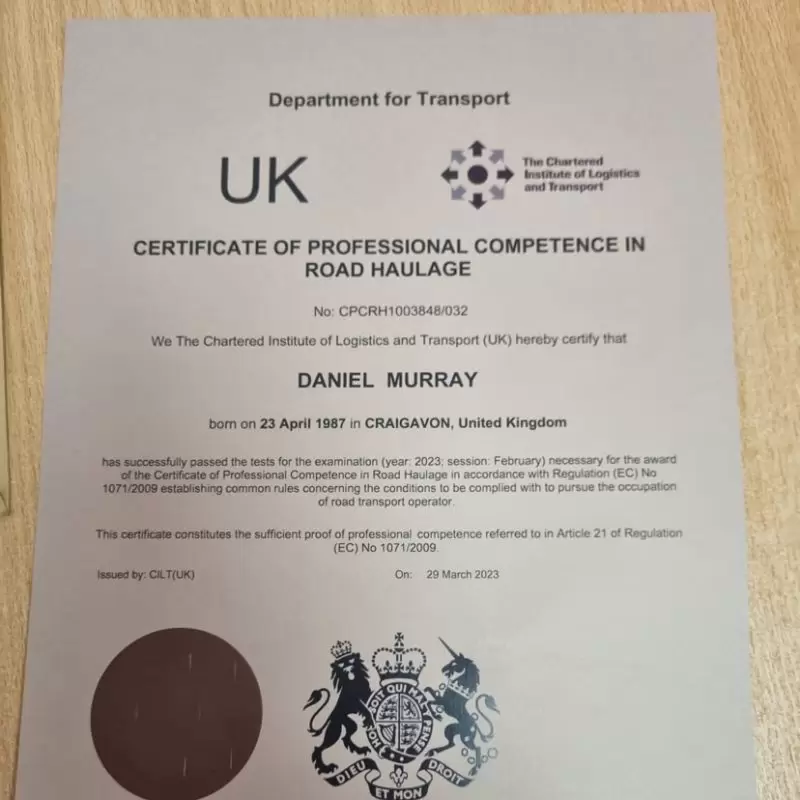
If you drive an HGV, bus or coach professionally in the UK, the Driver Certificate of Professional Competence (CPC) is not optional. It's a legal requirement for anyone operating vehicles over 3.5 tonnes or carrying more than nine passengers for payment. Without a valid CPC licence, you cannot work legally — and if you're caught driving professionally without your Driver Qualification Card (DQC), you could face a fixed penalty of up to £1,000.
dvsadocs helps professional drivers across the UK understand the CPC process, stay compliant with the latest rules introduced in December 2024, and avoid the paperwork mistakes that often delay applications and renewals.
The Certificate of Professional Competence (CPC) was introduced to improve safety standards for professional drivers across the UK and Europe. Managed by the DVSA, the system operates on a five-year cycle. Drivers complete an initial qualification, receive their Driver Qualification Card (DQC), and then maintain it through periodic training every five years.
The DQC is the card you must carry while working professionally. Employers, site managers and enforcement officers regularly check it to confirm your qualification status.
From 3 December 2024, the CPC system was divided into two separate categories:
This is the original CPC system under a new name. Drivers who complete 35 hours of approved periodic training every five years can work professionally in both the UK and EU.
The training structure remains largely unchanged:
This newer option was introduced for drivers operating exclusively within the UK.
The overall 35-hour requirement remains, but the rules are more flexible:
National CPC Driver Qualification Cards look similar to International CPC cards but include the wording:
"DOMESTIC UK USE ONLY"
Choosing the correct CPC route is important, especially if your work may involve international driving in the future.
Drivers who passed their car driving test on or after 1 January 1997 must complete the initial CPC qualification before driving professionally.
The qualification process includes four parts:
Parts 1 and 2 can be taken in any order, but both must be passed within two years.
This includes:
Drivers are tested across five CPC topic areas. To pass, you must score:
Once all four modules are completed successfully, your Driver Qualification Card is issued automatically and posted to the address listed on your driving licence. Most cards arrive within three weeks.
Drivers who obtained an LGV licence before 10 September 2009, or a PCV licence before 10 September 2008, usually hold acquired rights. These drivers do not need to complete the initial qualification, but they must still complete periodic CPC training to keep their DQC valid.
New rules introduced from 1 February 2025 created a simpler route for drivers returning after a break from professional driving.
If your CPC expired between 60 days and two years ago, you can now:
If your CPC has been expired for more than two years, the full 35 hours of periodic training must be completed before returning to professional driving.
Training prices vary by provider, but most seven-hour CPC courses cost around £40, meaning a full renewal generally costs approximately £200.
The CPC process can become confusing quickly — especially when dealing with changing rules, training records, renewal deadlines and Driver Qualification Card categories.
Missing paperwork or selecting the wrong CPC route can delay applications and potentially keep drivers off the road unnecessarily.
dvsadocs helps professional drivers across the UK manage CPC applications, renewals and compliance paperwork with less stress and fewer delays. Whether you're applying for your first CPC licence, renewing an existing qualification, or returning to professional driving after time away, our team can help make the process straightforward from start to finish.